American Golden-Plover

Given the wonderful weather we have been having, today’s overcast skies and cooler temperatures was a change of pace. After starting my walk at Boundary Bay it was not long before I noticed some movement just west of 104 St. At first glance I could make out some American Pipits. But on closer examination, something larger caught my eye.
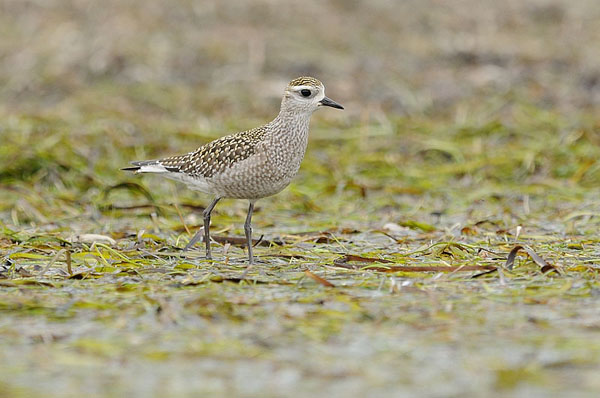
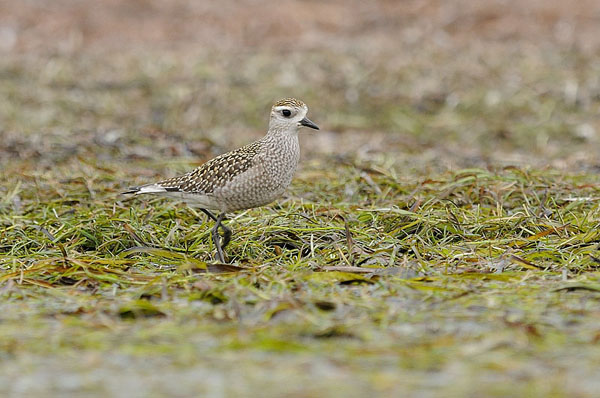
American Golden-Plover

It was an American Golden-Plover.

American Golden-Plover

It has been about three years since I was last able to photograph one.
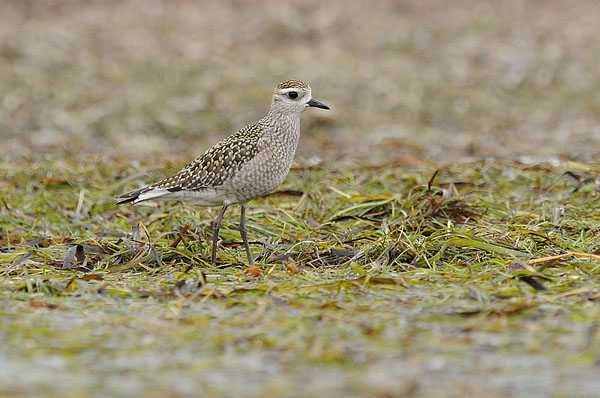
American Golden-Plover

The American Golden-Plover will venture in closer to the dyke and away from the main flocks of Black-bellied Plovers. This can make it a little easier to get photos of one.
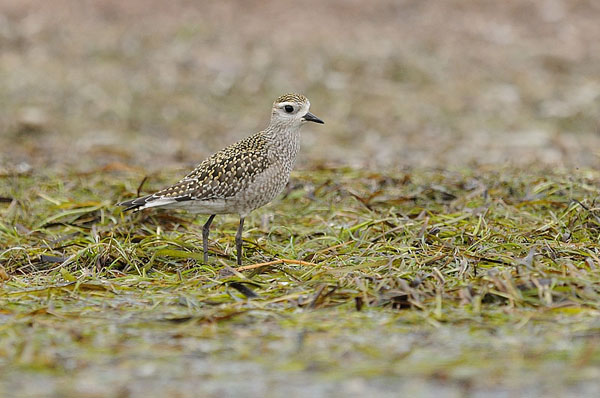
American Golden-Plover

The American Golden-Plover is a regular, but uncommon visitor at this time of year while migrating from the arctic all the way to South America.
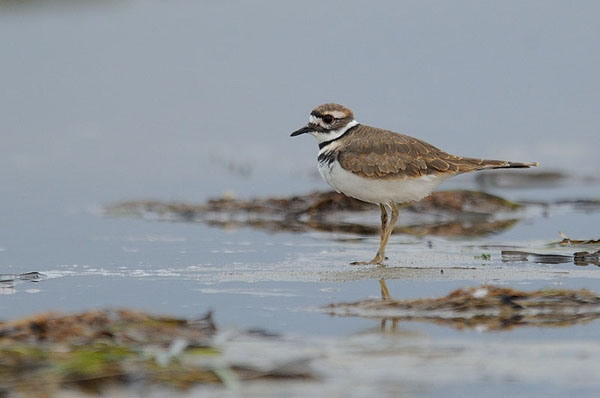
Killdeer
Killdeer

One of our regular plovers for this area is the Killdeer.
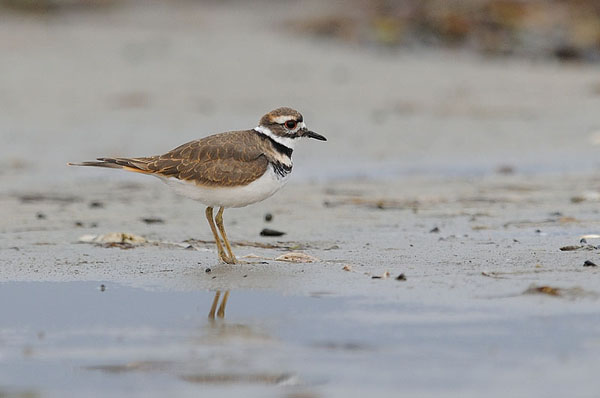
Killdeer
Killdeer

The Killdeer can usually be seen year round and also nests in this area. The Black-bellied Plovers were also present in large numbers today, but as usual were not going to let me get close. That is OK though, with American Golden-Plover already stealing the spotlight.

Semipalmated Plovers

Despite the lack of activity of late, I was back out at Boundary Bay a couple of hours before the high tide. The shoreline and tidal pools were quiet once again, but realizing this might be the case, there was a “Plan B”. This involved scanning some of the dryer areas further out for a shore bird that prefers these conditions, the Semipalmated Plover. It was not long before I located a small flock about 200m out from the pilings. As they were the only game in town, so to speak, I took my time approaching. The final 20m of the approach was down on my knees slowly moving the camera on the tripod in front of me. It took a little time, but was worth it as I managed to get fairly close without spooking the birds.

Western Sandpiper
Western Sandpiper

After all that the first photo was not of a plover, but a Western Sandpiper with them.

Semipalmated Plover
Semipalmated Plover

Then the Semipalmated Plovers started to work their way in front of me.

Semipalmated Plover
Semipalmated Plover

I tried to position myself in the middle of the group,

Semipalmated Plover
Semipalmated Plover

… hoping to improve my chances of getting multiple birds going by.

Semipalmated Plover
Semipalmated Plover

Once in this close,

Semipalmated Plover
Semipalmated Plover

… you want to keep your movement to a minimum.

Semipalmated Plover
Semipalmated Plover

At times they would move away, but then come back towards me again.

Western Sandpiper
Western Sandpiper

Then the Western Sandpiper trekked by once more.

Semipalmated Plover
Semipalmated Plover

Both the Semipalmated Plover and Western Sandpiper are fairly small,

Semipalmated Plover
Semipalmated Plover

… so being able to get this close certainly helps to get better photos. It was just shy of an hour I spent with these birds. I think that qualifies “Plan B” as a success.

Baird’s & Least Sandpipers

Well, so much for my wishful thinking from yesterday. While the higher tides replenished the tidal pools providing some variety to the habitat, the bay area was still conspicuously quiet on the shore bird front again this afternoon.

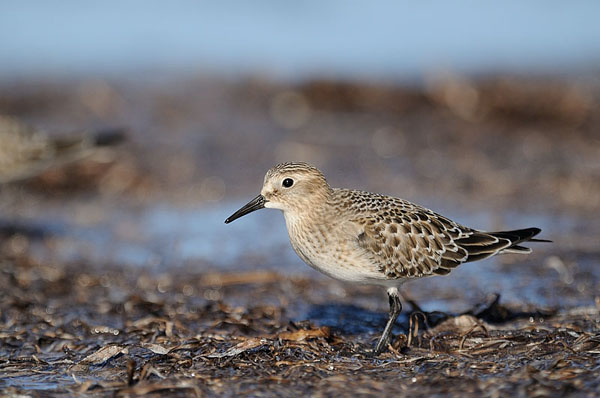
Baird's Sandpiper
Baird’s Sandpiper

Thank goodness for a small group of Baird’s Sandpipers,

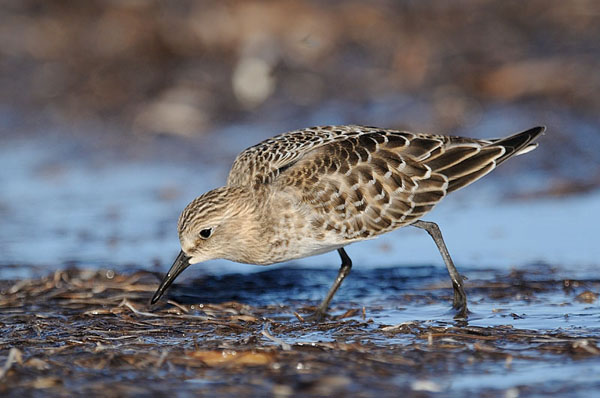
Baird's Sandpiper
Baird’s Sandpiper

… or I might have been skunked on today’s walk.

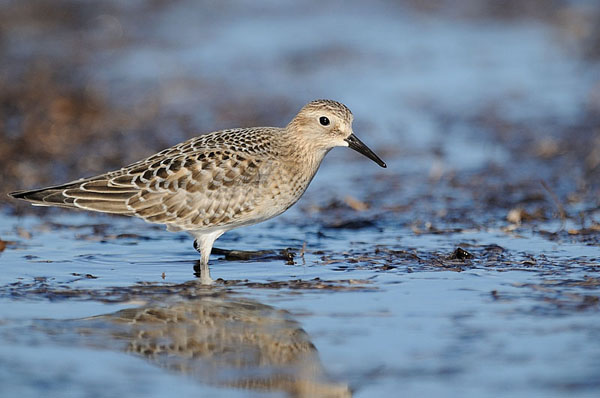
Baird's Sandpiper
Baird’s Sandpiper

There were only three of them,

Least Sandpiper
Least Sandpiper

… and the odd man out was this Least Sandpiper tagging along with them.

Baird's Sandpiper
Baird’s Sandpiper

They flew in together to the area of the pilings.

Baird's Sandpiper
Baird’s Sandpiper

The Baird’s Sandpipers allowed me to get quite close while they foraged.

Baird's Sandpiper & Least Sandpiper
Baird’s Sandpiper & Least Sandpiper

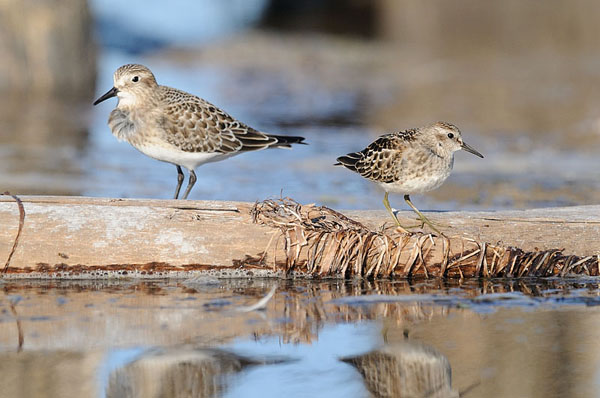
Then as the tide came in the group got back together on this piece of wood.

Baird's Sandpiper & Least Sandpiper
Baird’s Sandpiper & Least Sandpiper

While they were trying to avoid the rising water levels, it did provide a couple of shots showing the difference in size between the larger Baird’s Sandpiper and our smallest peep the Least Sandpiper.